He visited a school where students spoke faster than any textbook recording.
He ordered food badly, missed trains, confused two similar words, and learned that fluency did not mean never making mistakes.
That relieved him.
For months, people treated his German as something magical.
In Germany, it became a language again.
Something to practice.
Something to get wrong.
Something to love.
The Grand Wellington Hotel fired Everett Shaw.
An internal investigation found that he had repeatedly mistreated housekeeping staff and their families.
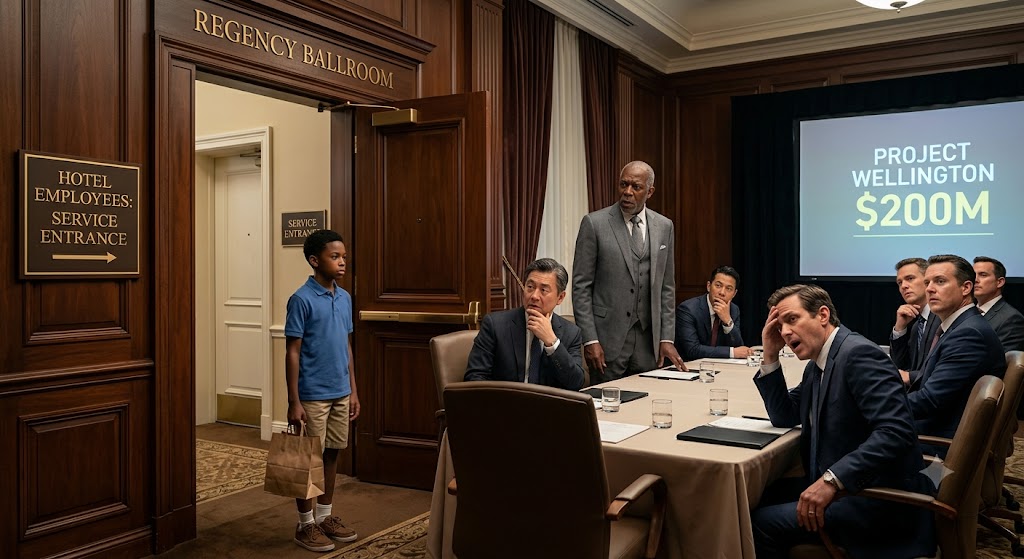
Employees described being told to use freight elevators even when carrying supplies to public floors.
Cleaning workers were expected to disappear whenever executives arrived.
Angela had reported Everett twice.
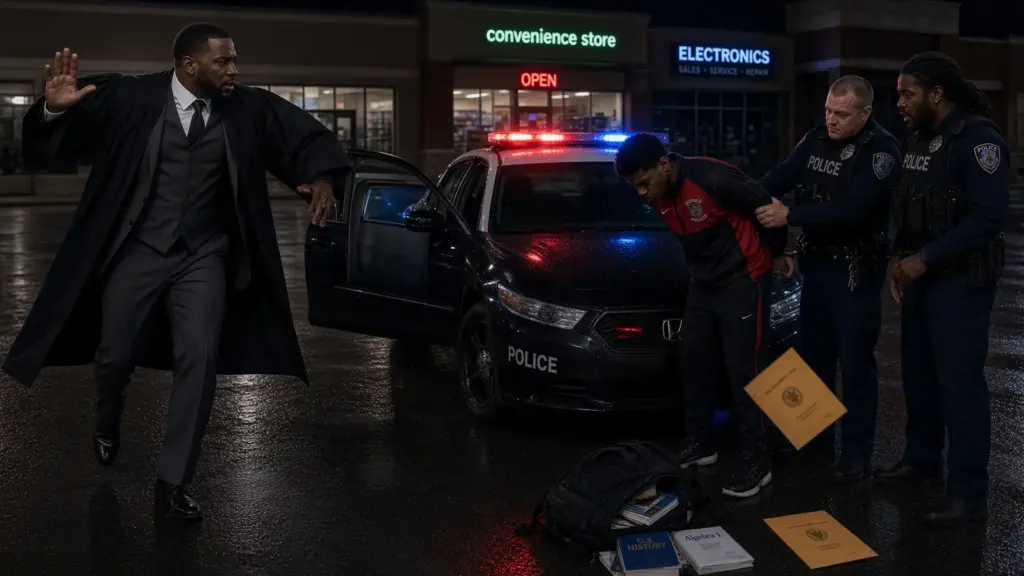
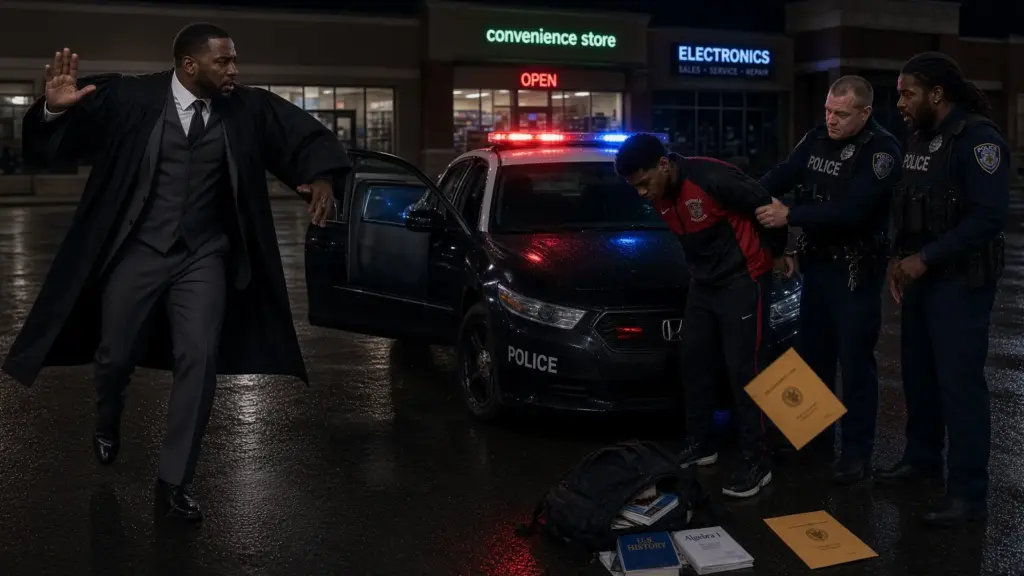
Nothing happened until a video showed him grabbing Miles.
The hotel offered Angela a settlement and a promotion.
She accepted the settlement.
She declined the promotion.
Instead, she used part of the money to complete a facilities-management certificate she had postponed after Aaron died.
Within two years, she became operations supervisor at a university conference center.
On her first day, she changed one rule.
Children of employees waiting during school closures had a designated study room with windows, desks, and direct access to the staff cafeteria.
They were not hidden in a service corridor.
The room was named for Aaron Turner.
Angela did not announce that publicly.
The staff knew.
That was enough.
Thomas Bellamy changed Halcyon too, though not as quickly as public statements suggested.
The first changes were formal.
Independent language review.
Conflict disclosure.
Whistleblower protection.
Limits on executive contracting authority.
Then came the harder work.
Junior employees had to be allowed to question senior decisions without being labeled disloyal.
Support staff could report concerns directly.
Contractors and hotel workers in corporate spaces received the same misconduct protections as employees.
At a company meeting, Thomas displayed no photograph of Miles.
Angela had asked him not to use her son as decoration.
Instead, he showed two contract sentences.
One German.
One English.
They did not mean the same thing.
“Everyone in the ballroom had access to expensive advisers,” he said. “The person who stopped the fraud was the person we had decided did not belong in the room.”
He looked toward his executives.
“That is not an inspiring accident. It is an institutional failure.”
Some employees expected applause.
Thomas did not ask for it.
Three years after the meeting, Miles returned to the Grand Wellington.
He was fourteen.
The hotel had invited students from local public schools to attend a youth language conference.
Miles served on a panel about translation and ethics.
He almost refused.
Angela told him to decide based on the event, not the building.
The ballroom looked smaller than he remembered.
A new manager greeted them at the entrance.
No one grabbed his shoulder.
No one asked where the cleaning woman was.
Miles carried the battered dictionary.
The tape on the spine had been replaced twice.
During the panel, a college student asked how translators could remain neutral.
Miles thought before answering.
“They can’t pretend they have no power.”
The moderator leaned closer.
“What do you mean?”
“If people depend on you to understand each other, you can make them angry, calm, afraid, or confident by changing a few words.”
He opened the dictionary.
“So you keep records. You let people compare. You don’t make yourself the only door between them.”
Another student asked whether he wanted to become a professional translator.
“Maybe.”
“After what happened?”
“Because of what happened.”
The answer surprised Angela.
Miles looked toward her.
“My dad taught me that translation carries meaning.”
He touched the page where Aaron’s name was written.
“Adrian Keller used it to control meaning. That does not mean the work belongs to him.”
After the panel, Miles walked through the service corridor behind the ballroom.
The narrow gap above the movable wall remained.
Voices from the conference passed through it.
He stopped where he had sat with the dictionary three years earlier.
Angela stood beside him.
“This is where you heard them?”
“Yes.”
“You could have told me.”
“I thought you’d lose your job.”
“I might have.”
Miles looked at her.
“Would you have wanted me to stay quiet?”
Angela considered the question honestly.
She remembered the rent overdue that month.
The medication in the lunch bag.
The fear of losing health insurance.
The way hotel management treated complaints from housekeeping staff.
“I would have been afraid,” she said.
“That’s not what I asked.”
“No.”
She smiled faintly.
“You’ve been using that answer on me since you were eight.”
“You use adult answers.”
“I am an adult.”
“Exactly.”
Angela looked through the service doorway toward the ballroom.
“No,” she said. “I would not have wanted you to stay quiet.”
They continued walking.
At the end of the corridor, a framed photograph showed the signing of the revised battery partnership.
Thomas Bellamy and Klaus Reinhardt stood at the center.
Executives and engineers surrounded them.
Miles and Angela were visible in the audience, several rows back.
Not on the stage.
Not holding a ceremonial pen.
Present.
That mattered more.
The Ohio plant opened the following year.
It employed hundreds of workers.
A training center beside the main building included a language laboratory named for Aaron Turner.
The companies asked Angela and Miles for permission.
This time, they said yes.
The dedication plaque did not describe Miles as a prodigy.
It read:
AARON TURNER LANGUAGE CENTER
Dedicated to the principle that understanding requires accuracy, humility, and the courage to compare what was said with what was heard.
Miles stood beneath it with his father’s dictionary.
Thomas Bellamy approached after the ceremony.
He had retired as CEO but remained on the company’s ethics board.
“You’ve grown,” he said.
“That happens.”
Thomas smiled.
“You still answer questions directly.”
“That also happens.”
They looked through the glass at students testing headsets.
Thomas became serious.
“I think about that ballroom often.”
Miles did too.
Not always about the fraud.
Sometimes about Richard’s joke.
Give the cleaning woman’s son a mop.