“What should I do with it?”
“Keep it until you meet someone who would defend a stranger with the same courage she would defend a king.”
Six months later, Martinez Global’s holding company was dissolved.
George was denied bail after investigators discovered accounts in three countries. Beverly sold the mansion, the private jet, and most of her jewelry to cover legal judgments.
Fiona accepted a plea agreement.
She sent me seventeen letters.
I read none of them.
The operating divisions reopened under employee ownership. Thousands kept their jobs. Pension losses were restored using assets recovered from the Martinez family trusts.
The Grand Aurelia Ballroom became famous for the wedding that ended before dinner.
People still debated the moment the groom removed his ring.
Some called it impulsive.
Some called it heroic.
They were wrong.
The most important moment happened later, after the cameras turned away.
It happened when my father and I returned to our old neighborhood.
He stood inside the tiny kitchen where he had once skipped meals so I could eat. The wallpaper was faded. The refrigerator hummed loudly. Rain tapped the window above the sink.
I opened the cabinet and found two chipped bowls.
Dad warmed leftover soup.
No champagne.
No orchestra.
No chandeliers.
Just the two of us at a scratched wooden table.
He pushed the fuller bowl toward me.
I looked down.
His bowl held less.
Even after everything, he had done it again.
I switched the bowls.
Dad raised an eyebrow.
“What are you doing?”
“Correcting forty years of bad math.”
He smiled.
Then his eyes filled with tears.
The man who had faced billionaires without trembling looked down at his soup because he could not bear to let me see him cry.
I reached across the table and took his scarred hand.
“You know what the strangest part is?” I said.
“What?”
“They thought you were trash.”
He squeezed my hand.
“People often confuse simplicity with worthlessness.”
“No,” I said. “That isn’t the strange part.”
He looked at me.
“The strange part is that you could have destroyed them at any moment.”
Dad’s expression became thoughtful.
“Power isn’t proven by how quickly you destroy someone.”
“How is it proven?”
“By how long you give them to reveal whether destruction is necessary.”
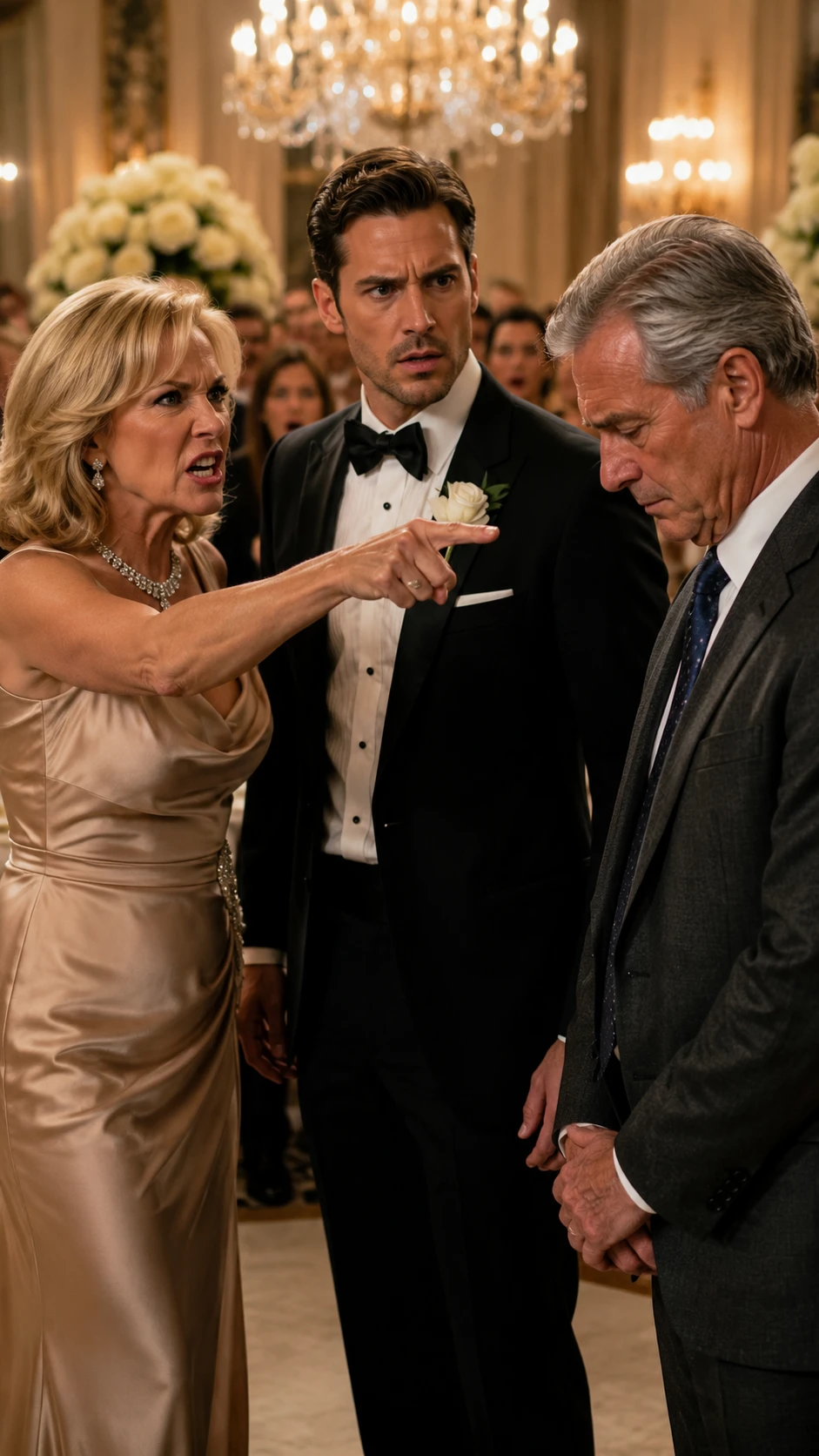
I remembered Beverly’s microphone.
George’s toast.
Fiona’s laugh.
They had been given every chance.
They had revealed themselves.
A year later, the Harbor District project broke ground.
The new freight terminal included affordable housing, public parks, restored warehouses, and a training center for young tradespeople.
At the entrance stood a bronze plaque.
The board wanted to name the building after my father.
He refused.
Instead, the plaque carried the names of four hundred and twelve workers who had lost their pensions decades earlier—the workers whose suffering had inspired everything Dad later built.
At the bottom, beneath those names, was a single sentence:
**Dignity does not become valuable when powerful people recognize it. It was valuable all along.**
During the opening ceremony, hundreds of workers surrounded my father.
They shook his hand.
They told him about homes they had kept, retirements that had been saved, and children who could now attend college.
He wore the same charcoal suit.
The sleeves were still too short.
This time, no one laughed.
I stood beside him wearing my grandfather’s faded tie.
Henry approached with a woman from the consortium’s legal team.
Her name was Claire.
She had been the junior attorney who first noticed irregular language in my prenuptial agreement. She had quietly alerted Henry before the wedding, risking her career to protect a man she had never met.
Over the following months, Claire and I worked together on the Harbor District.
She was brilliant, stubborn, and unimpressed by wealth.
The first time she met Dad, he arrived at a board meeting carrying a dented metal lunchbox.
One executive smirked.
Claire turned to him and said, “Mr. Henderson has protected more workers than everyone at this table combined. Perhaps we should be grateful he brought lunch rather than an audit.”
Dad liked her immediately.
Two years later, when I asked Claire to marry me, I gave her my mother’s simple gold ring.
She cried.
Then she asked one question.
“What does your father think?”
I laughed.
“He told me to read every page.”
We married in Dad’s backyard beneath strings of warm lights.
Forty-two guests attended.
Dad sat at the front.
There were no assigned tables based on wealth.
No champagne fountain.
No orchestra.
Only good food, loud laughter, and people who loved us enough to be kind when there was nothing to gain.
Before the ceremony, Claire noticed Dad adjusting his old suit near the porch.
She walked over and straightened his faded tie.
“You look perfect,” she told him.
Dad’s eyes met mine.
In that moment, I remembered another ballroom, another bride, and five hundred people who had mistaken a humble man for someone insignificant.
They had believed his worn shoes made him weak.
They had believed his silence made him helpless.
They had believed money gave them the right to decide who deserved dignity.
**They learned too late that the quietest man in the room was the one holding their entire empire in his hands.**
But that was never the real twist.
The real twist was that my father had not come to the wedding to destroy them.
He had come prepared to save them.
All they had needed to do was show him one small piece of humanity.
One act of kindness.
One reason to believe their company deserved a second chance.
Instead, before five hundred witnesses, they pointed at the man offering them salvation—
—and called him trash.