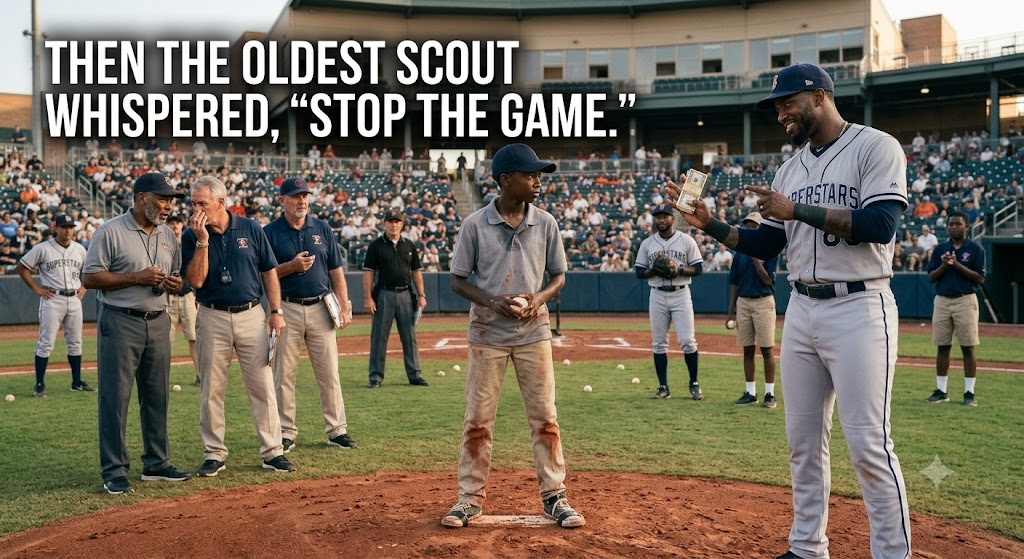
“La oportunidad de dejar de repetir la mentira.”
“No es una oportunidad que necesites que te dé.”
Cole asimiló la respuesta.
Luego se dirigió hacia la salida del estadio, donde los periodistas ya se estaban reuniendo.
Por primera vez en años, caminó hacia las cámaras sin saber cómo le haría quedar la historia.
La Universidad Estatal de Franklin anunció una investigación independiente tres días después.
El entrenador Raymond Shaw se había retirado.
Martin Clay siguió siendo un poderoso agente deportivo.
Ambos negaron haber cometido irregularidades.
Luego Cole publicó sus discos.
Los correos mostraban a Clay debatiendo la necesidad de “estabilizar la narrativa del campeonato.”
Un mensaje al abogado de la universidad decía:
Maddox debe seguir siendo el héroe. La conducta de Turner proporciona la explicación más clara para la lesión.
Otro correo electrónico habló sobre Walter Briggs.
Mantén a Briggs alejado de la familia. Pedirá el expediente médico.
La universidad descubrió que el informe original del Dr. Keene había sido retirado del archivo oficial.
Existía una copia escaneada en una carpeta de seguros.
Sus metadatos demostraban que había sido creado antes del partido por el campeonato.
Darius había estado diciendo la verdad.
El título de campeón no fue borrado.
El partido había ocurrido.
Pero Franklin State corrigió su historial histórico.
Eliminó el lenguaje que describía a Darius como imprudente.
Le devolvió su prestigio académico.
Pidió disculpas públicamente por suprimir información médica y tomar represalias contra un atleta lesionado.
La liga profesional abrió una investigación sobre las declaraciones juradas de Cole durante una disputa posterior de seguros.
Su equipo le puso en baja administrativa.
Dos patrocinadores suspendieron sus contratos.
La junta de su fundación solicitó una auditoría porque los materiales promocionales habían utilizado la historia falsa del campeonato para recaudar fondos.
Algunos aficionados le defendieron.
Decían que era joven.
Otros decían que confesar tras la exposición no era valor.
Ambas afirmaciones contenían parte de la verdad.
Cole era joven cuando se contó la primera mentira.
Era un hombre adulto cuando se convirtió en un capítulo, un discurso y una marca.
Aceptó una suspensión.
Devolvió sus premios universitarios de la época del campeonato a Franklin State hasta que se corrigió el récord de Darius.
Revisó su autobiografía y destinó los derechos de autor futuros desde la edición original al apoyo médico para atletas universitarios lesionados.
Las acciones no borraron lo ocurrido.
Dieron las consecuencias a un lugar donde ir.
Martin Clay perdió varios clientes tras hacerse públicos los correos electrónicos.
La universidad prohibió al entrenador Shaw participar en eventos oficiales.
El Dr. Keene, que había pasado años creyendo que su informe había desaparecido por error administrativo, testificó ante un comité de seguridad de atletas universitarios.
Las nuevas normas exigían que las restricciones médicas se registraran en sistemas que los entrenadores y agentes no podían modificar.
Los atletas recibían copias independientes automáticamente.
Ningún miembro del personal pudo eliminar una orden de no jugar.
Los cambios llegaron quince años demasiado tarde para Darius.
Podrían llegar a tiempo para que alguien más.
El Centro Comunitario East Ward recibió más que el coste de su tejado.
Los espectadores que vieron la presentación de Malik donaron.
Los exatletas aportaron equipamiento.
A local construction company repaired the gym without charging for labor.
Lorraine Hayes refused offers that demanded Malik appear in advertisements.
“He is a child,” she told reporters. “Not a campaign.”
Walter Briggs began visiting the center twice a week.
The first day, thirty children arrived carrying gloves.
The second week, seventy came.
Walter taught them how to warm up.
How to rest.
How to say something when pain began.
He spent as much time teaching when not to throw as he did teaching how.
Darius attended the first session from the parking lot.
He sat in his truck and watched through the windshield.
Malik saw him.
He did not wave.
He knew his father needed to choose the distance himself.
On the third week, Darius came inside.
Walter handed him a bucket of baseballs.
“You’re late.”
“I’m not on your staff.”
“You are holding the bucket.”
Darius looked at it.
Then at Malik.
“Front side opens early,” he called.
Malik turned.
“You’ve been watching?”
Darius walked toward the mound.
“More than you think.”
They began slowly.
No radar guns.
No cameras.
No promises of scholarships.
Darius corrected Malik’s foot placement.
Walter changed his grip.
Malik complained that the safer changeup did not fall as sharply as the old one.
“Good,” Darius said.
“How is that good?”
“Because you have time to learn it without breaking yourself.”
The words carried more than pitching advice.
Malik understood.
Darius did not become a full-time coach immediately.
Some days the gym smelled like the university training room and he had to step outside.
Some nights he woke remembering the moment his elbow failed.
Healing was not a triumphant return to the mound.
It was showing up again after the memory told him to stay away.
Walter never rushed him.
Malik tried not to.
Cole visited East Ward four months after the charity game.
He arrived without reporters.
Lorraine almost refused to let him enter.
Darius made the decision.
“Let him come.”
Cole wore jeans, a plain jacket, and no watch.
The children recognized him immediately.
They gathered near the gym door.
Some asked for autographs.
Others stared.
Malik stood beside the pitching net.
Cole carried a wooden box.
Inside was the baseball from the championship home run.
For fifteen years, it had been displayed in his house beneath lights.
He placed it on a folding table.
“I thought this belonged in a museum,” Cole said.
Darius looked at it.
“It belongs to you.”
“It came after your last pitch.”
“That still doesn’t make it mine.”
Cole nodded.
He had expected rejection.
“What do I do with it?”
Darius looked toward the children.
“Tell the whole story when people ask.”
Cole later donated the ball to Franklin State’s athletic archive.
The display included the medical report.
Darius’s testimony.
Cole’s confession.