“I realized he had contaminated it.”
“With what?”
“I did not know.”
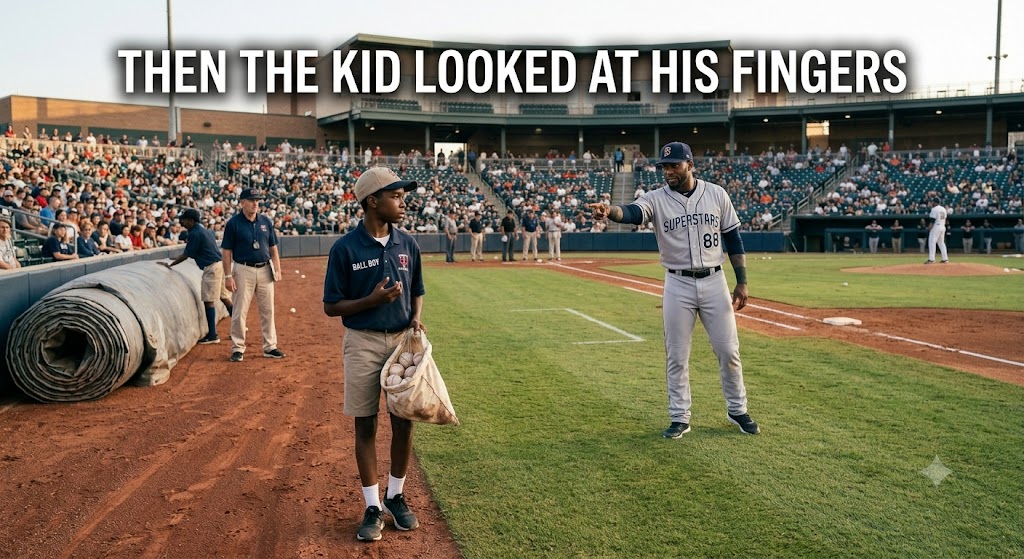
“You told him to give it back before anyone identified the residue.”
“I saw black material on his fingers.”
“Why did you attempt to take it instead of asking an official to inspect it?”
“I was concerned for safety.”
“You lunged toward him.”
“I moved quickly.”
“You shouted, ‘Give me that ball now.’”
“I was under pressure.”
The hearing officer displayed Malik’s photograph of the locker.
“Is this your metal case?”
“It resembles one I own.”
“What was inside?”
“Training supplies.”
“Were those baseballs?”
“Possibly.”
“Why were balls marked ‘C.M. starts only’?”
“I did not write that.”
“Tom Vickers says you did.”
“Mr. Vickers is avoiding responsibility.”
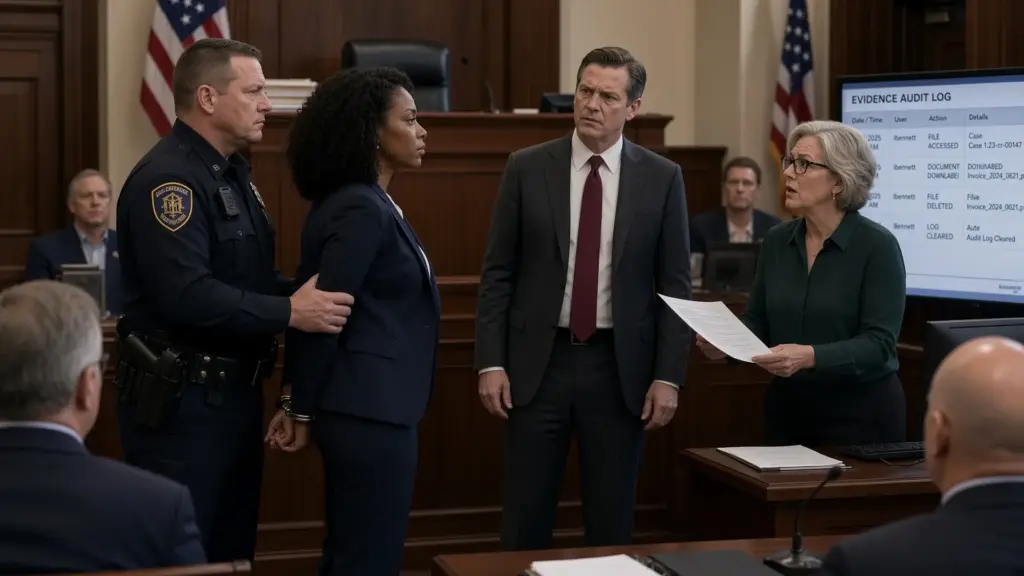
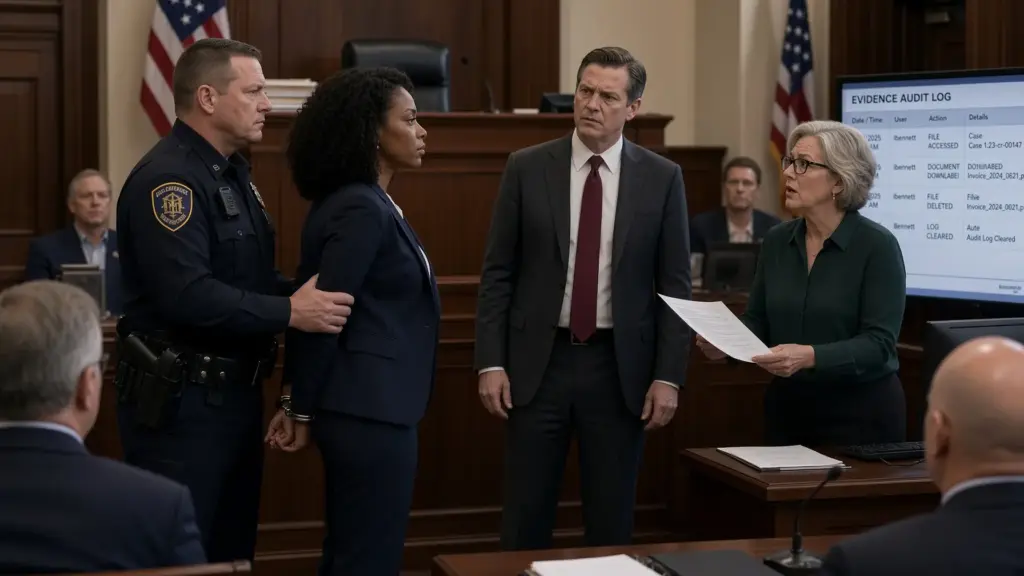
The investigator presented text messages.
Maddox to Tom:
Blue batch has best bite. Need two in game flow by fifth.
Tom replied:
Too risky after ump warning.
Maddox answered:
I’m chasing history. Do your job.
The room became quiet.
Maddox’s attorney requested a recess.
The hearing officer denied it.
Another message appeared from the night of the record.
Twenty-one. Burn the towels. Clear locker before media tour.
Then:
Use the kid if you need cleanup. He won’t know.
Malik sat behind his attorney and mother.
Maddox looked toward him for the first time.
There was no apology in his face.
Only anger that the sentence had survived.
The investigator asked, “Which kid?”
Maddox remained silent.
“Was it Malik Turner?”
“I don’t remember.”
“You pointed him out by name in the next message.”
The full exchange appeared.
Maddox:
Malik’s still there. Tell him it’s bat grip.
Tom:
He asks questions.
Maddox:
Then tell him questions cost jobs.
Keisha inhaled sharply.
Malik stared at the screen.
He had always believed Tom chose the lie about bat grip.
Maddox wrote it.
Every detail had been planned.
The cleaning.
The camera outage.
The threat.
Only the public challenge had not been planned carefully enough.
Maddox’s attorney argued that even if a foreign substance had been used, the strikeout record could not be erased because officials had approved every game ball.
The league presented pitch-tracking evidence.
On altered-ball pitches, Maddox’s breaking ball gained hundreds of additional revolutions per minute.
Its movement increased several inches.
Nine of the record twenty-one strikeouts ended on pitches from confirmed treated-ball sequences.
Six more occurred during innings where residue was found on Luis’s equipment.
The statistician refused to claim exactly what would have happened without the substance.
No one could replay the game honestly.
That was the point.
The record was not reliable because the conditions were not real.
Maddox testified that pitchers had always looked for grip.
He mentioned sunscreen, rosin, dirt, and sweat.
The hearing officer answered, “There is a difference between seeking control and secretly rebuilding baseballs.”
Maddox said the league celebrated strikeouts, velocity, and movement while pretending players created them naturally.
He accused coaches and executives of benefiting from his performance.
Some of that was true.
It did not make the cheating legal.
It made the responsibility wider.
The Captains’ pitching coach was suspended.
The director who ignored Priya Shah’s report was fired.
The club received a major fine and lost draft selections.
Tom Vickers received a lifetime ban from team equipment work but avoided criminal charges after cooperating.
The chemist who supplied the polymer formula lost his laboratory position and faced civil action.
Maddox received a three-year suspension.
His record was vacated.
The official line returned to the previous league mark.
His contract allowed the Captains to withhold most of his remaining guaranteed money because the violation involved deliberate equipment manipulation.
Maddox appealed.
He lost.
At the public announcement, the league commissioner spoke about integrity.
Reporters asked about Malik.
The commissioner called him “an observant young employee.”
Keisha disliked the phrase.
“He was a child they planned to frame,” she told a reporter afterward. “Say that part.”
The reporter did.
The Captains reinstated Malik’s job and offered back pay.
Keisha demanded an apology first.
The team president invited them to a private office.
“We regret the way the situation was handled,” he said.
“That is not an apology,” Keisha replied.
He tried again.
“We apologize for suspending Malik while evidence showed he preserved league property.”
“And?”
“For assigning him duties outside his role.”
“And?”
The president looked toward the team attorney.
Keisha waited.
“And for failing to protect him from retaliation by a player and staff members.”
Malik spoke.
“You need to say you believed them before me.”
The president looked at him.
“We did not reach conclusions.”
“You stopped my paycheck.”
The attorney began to speak.
The president raised one hand.
“You’re right.”
He leaned forward.
“We treated your position as easier to question than theirs.”
Malik nodded.
“That’s what happened.”
The apology did not erase it.
But naming the truth mattered.
The team offered Malik a scholarship to its youth baseball academy.
He refused at first.
“I don’t want payment for catching Maddox.”
“It is not payment,” the president said.
“That’s what everyone says when money comes after something bad.”
Keisha almost smiled.
Malik eventually accepted a different arrangement.
The Captains paid every underage stadium worker the wages withheld during investigations, created legal protections for reporting misconduct, and prohibited minors from cleaning private player spaces.
They also funded a city baseball program with independent management.
Malik joined that program like any other player.
No advertisement.
No ceremonial scholarship photograph.
No video about the brave ball boy.
At his first tryout, the coach asked what position he played.
“Pitcher.”
“Ever been measured?”
“No.”
“Travel experience?”
“No.”
“Why not?”
“Couldn’t afford it.”
The coach handed him a clean baseball.
No black residue.
No altered seams.
No crowd waiting to laugh.
“Warm up,” he said.
Malik threw twelve easy pitches.
Then fifteen at full effort.
He was not a miracle.
He did not throw ninety-eight miles per hour.
His fastball reached seventy-eight, strong for fourteen but not impossible.
His changeup dropped late.
His control was inconsistent.
He missed high when nervous.
The coach wrote notes.