The cleat print did not care about status.
Neither did the loosened rubber.
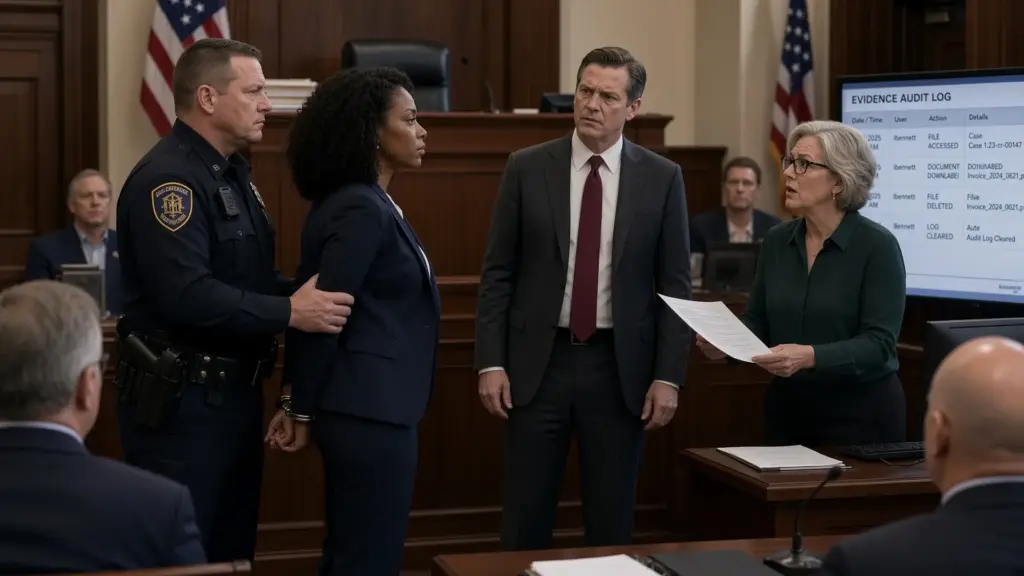
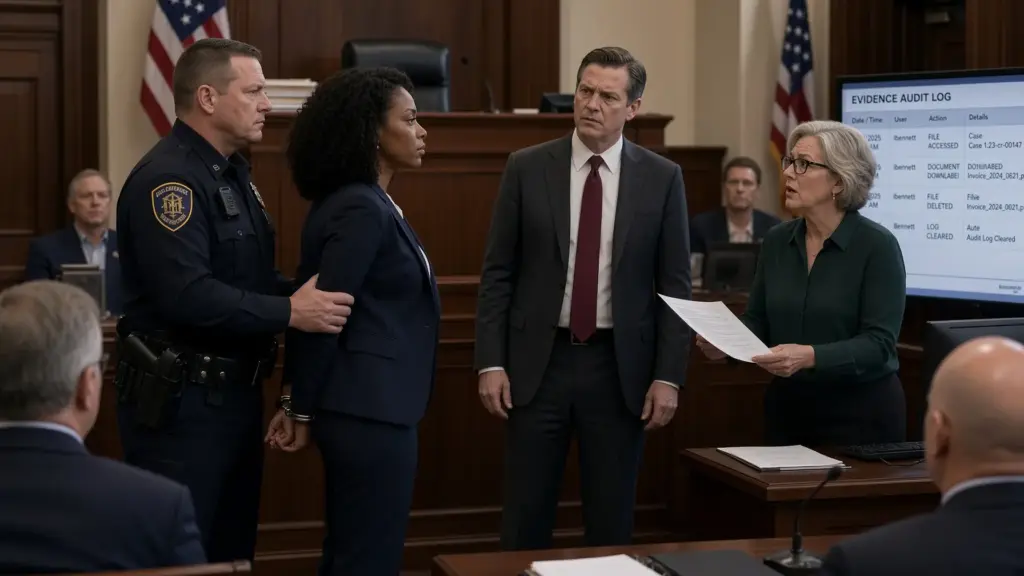
Neither did the access log.
Neither did the clay on Everett’s missing shoes.
Facts stayed facts.
That became Zion’s favorite part of field work.
Grass did not care how famous someone was.
Measurements did not care who signed the paycheck.
A pitching rubber was either secure or it was not.
Years later, Zion studied sports-surface engineering at college.
He returned to professional baseball after graduation.
Eventually he joined a league field-integrity team.
His job took him across the country.
He inspected stadiums before major events.
Measured mounds.
Checked base anchors.
Reviewed drainage.
Studied weather reports.
Worked with grounds crews.
He always introduced himself to the youngest worker first.
Not because young workers always knew something.
Because nobody should be invisible just because they carried a rake.
At one stadium, a sixteen-year-old seasonal worker said:
“Mr. Parker, there’s something weird near second base.”
An older supervisor immediately said:
“It’s fine.”
Zion looked at the teenager.
“What’s weird?”
The boy pointed.
“Grass is drying faster in one stripe.”
They checked.
A damaged irrigation line was leaking beneath the surface and draining away from the visible spot.
Nothing criminal.
Nothing dramatic.
But it could have caused a soft patch during play.
The supervisor later said:
“I thought he was overreacting.”
Zion answered:
“Maybe.”
Then he smiled.
“But looking costs less than assuming.”
That phrase became part of his training.
Looking costs less than assuming.
Isaiah retired when Zion was twenty-six.
At his final game, the stadium grounds crew surprised him.
They painted a small message on the equipment-room wall.
ISAIAH PARKER — 23 YEARS
NOTHING WENT WRONG.
He laughed until he cried.
Zion stood beside him.
“You really like that?”
“It’s perfect.”
“Most people would want something more dramatic.”
Isaiah shook his head.
“Drama means I failed.”
Years after the original championship, a documentary crew interviewed Zion about the night that made him famous.
The producer asked:
“What was the most important evidence?”
They expected him to say the security video.
Or the badge log.
Or Everett’s text messages.
Zion thought for a moment.
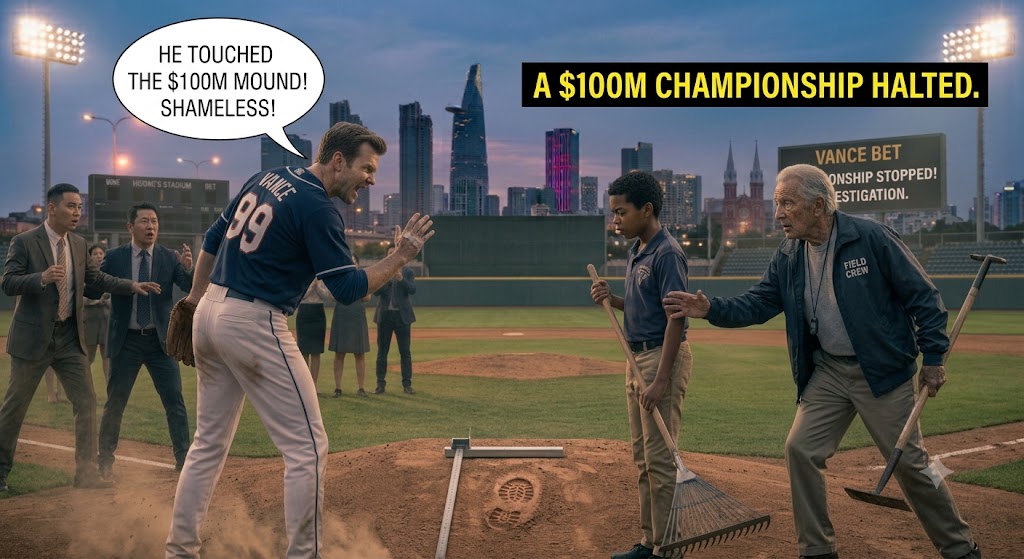
“The footprint.”
“Because it identified Sloan?”
“No.”
“It didn’t identify anyone.”
“Then why?”
“Because it gave us permission to ask the next question.”
The producer waited.
Zion continued.
“One footprint led to the rubber.”
“The rubber led to the holes.”
“The holes led to the access logs.”
“The access logs led to Mason.”
“Mason led to Everett.”
“Everett led to the messages.”
He smiled.
“But none of that happens if everybody agrees the first strange thing is too small to matter.”
The producer asked:
“Were you afraid to speak?”
Zion nodded.
“Especially after Coach Sloan laughed.”
“Why?”
“Because sometimes when an adult laughs at you, you start checking whether you’re wrong instead of whether they are.”
That line made the final documentary.
So did another.
The producer asked:
“What did Daniel Mercer do for you?”
Zion answered:
“He did not tell me I was right.”
“He told everyone to stop long enough to find out.”
That was the real difference.
Daniel did not stop a hundred-million-dollar championship because a teenager made an accusation.
He stopped it because a physical condition on the field required verification.
Zion respected that.
Blind belief would have been almost as bad as blind dismissal.
Evidence mattered.
Measure.
Check.
Test.
Follow the prints.
Then decide.
The championship became famous for the delay.
Fans remembered the four-hour wait.
Television networks remembered frantic scheduling.
League executives remembered sponsor calls.
Players remembered sitting in clubhouses wondering whether they would play.
But Zion remembered the mound at 5:42 in the morning.
Empty seats.
Cool air.
Fresh clay.
One cleat print.
Two patched holes.
And a pitching rubber that moved beneath Daniel Mercer’s hand.
Everett Sloan had believed the change was too small to matter.
Then he believed Zion was too unimportant to matter.
Se equivocó dos veces.
El campeonato sobrevivió.
El campo fue reparado.
Se jugó el partido.
El trofeo se entregaba en un montículo justo.
Y años después, cada vez que alguien le preguntaba a Zion cómo el hijo de un jardinero de quince años había conseguido detener un evento valorado en cien millones de dólares, respondía igual.
“No lo he detenido.”
“La huella sí.”
Entonces normalmente sonreía.
“Alguien tenía que darse cuenta.”
Fin.