Near the entrance stood the twelve-ounce weighted ball Ryan had given me.
The blue mark remained beside the seam.
Next to it was Arthur’s calibrated radar gun.
A plaque described what happened at the charity clinic.
It did not say a superstar discovered an unknown talent.
It said a famous player attempted to manufacture a public failure.
That distinction mattered.
Ryan did not create my moment.
Arthur did not create my arm.
The crowd did not create my worth by standing after the ninety-eight appeared.
My father had taught me.
My mother had protected me.
I had practiced when no one watched.
The radar gun only measured what was already there.
Years later, people still asked which pitch changed my life.
They expected me to say the ninety-eight-mile-per-hour Benton Fall.
I never did.
The pitch that changed everything hit the dirt ten feet before home plate.
It was ugly.
Slow on the scoreboard.
Thrown with a ball designed to make me fail.
That pitch exposed the trap.
It made Arthur stand.
It made Ryan laugh too loudly.
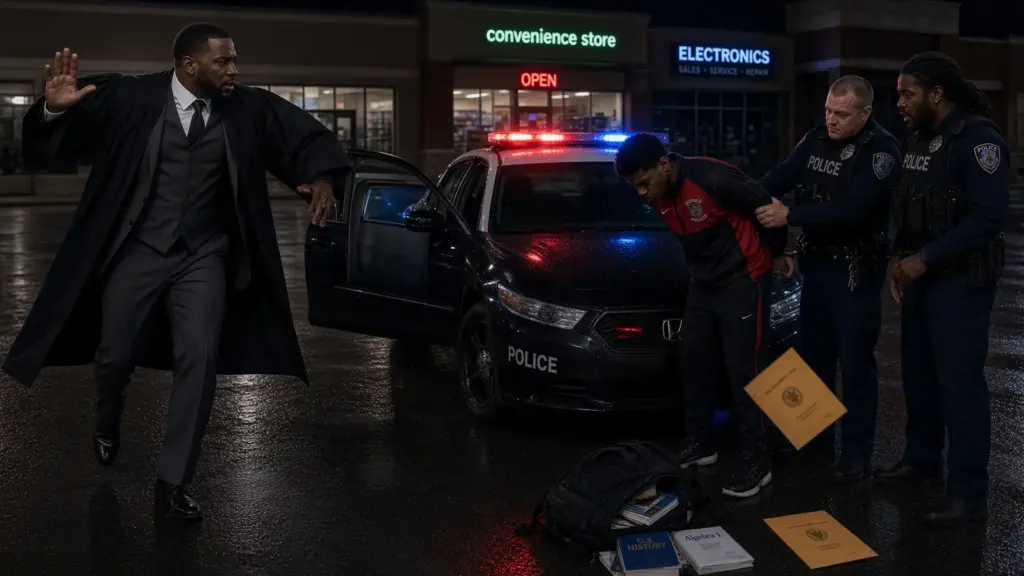
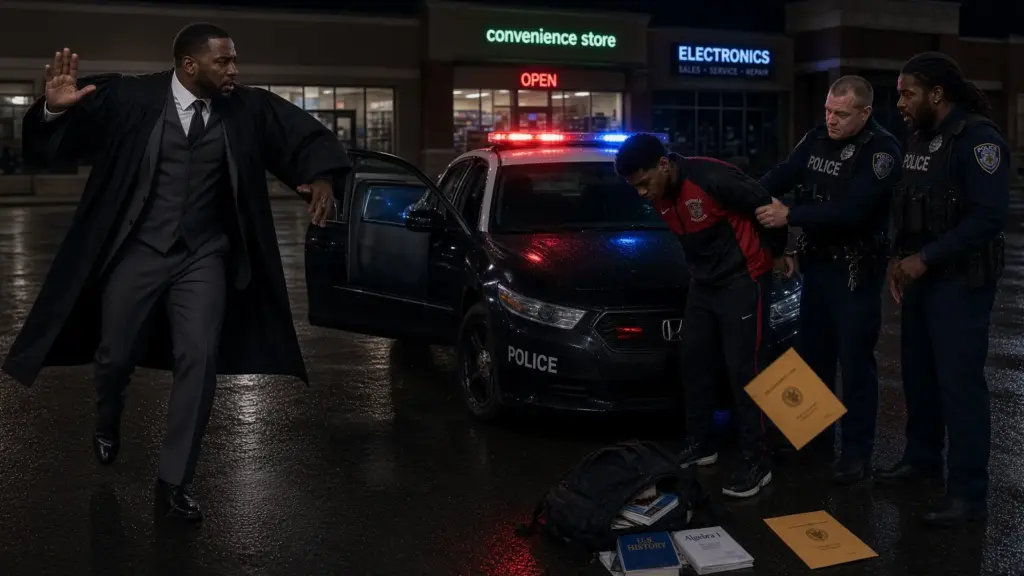
It brought my mother onto the field.
It opened the metal box.
It led us beneath the stadium.
And it taught me something no radar gun could measure.
Powerful people often depend on the first version of a story becoming permanent.
The weak ball boy.
The injured Black prospect.
The unstable father.
The grieving widow.
The retired scout who could not let go.
The superstar who invented everything himself.
They repeat those labels until records, money, and applause make them feel official.
But official is not the same as true.
Ryan Calloway had the ring.
The foundation.
The academies.
The cameras.
He controlled the public radar display.
Arthur Wynn had one old device that had not been connected to Ryan’s system.
That was enough.
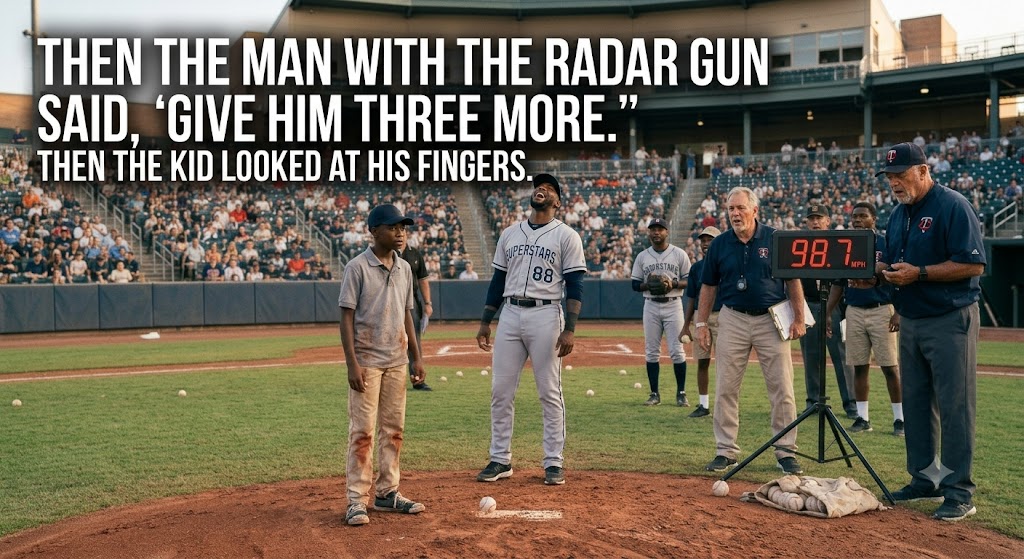
“Give him three more,” Arthur said.
Three pitches did not only reveal my speed.
They returned my father’s name to his work.
They exposed a medical fraud built on stolen identities.
They proved that a player rejected by every academy had never lacked talent.
He had been measured by people who needed him to disappear.
The Benton Fall still drops sharply near the plate.
Children now learn that Lionel created it.
They also learn what happened when others renamed it.
Not because every young player needs to carry our family’s pain.
Because the game improves when its history stops protecting the most famous person in the room.
My father once told me a great pitch makes a hitter believe the ball will stay where it is.
Then it changes.
Truth can move the same way.
For years, Ryan believed my father’s story was buried.
He believed my name could be flagged.
My application could be rejected.
My first pitch could be weighted.
My reading could be lowered.
Mi vergüenza podría ser difundida.
Planeó cada parte excepto el del anciano detrás del backstop.
Arthur vio la pelota caer al suelo.
Vio a Ryan reír.
Luego pidió tres más.
A veces la justicia no comienza con una actuación perfecta.
A veces empieza cuando una persona se da cuenta de que el fallo fue arreglado—
y se niega a dejar que sea la medida final.
El chico vestía unos pantalones de béisbol raídos y un guante que parecía haber sobrevivido a dos décadas de sol y lluvia. En las gradas del estadio de exhibición, bajo el bochorno de la tarde, los ojeadores de las Grandes Ligas (MLB) ajustaban sus carpetas, masticaban chicle con desganado aburrimiento y se murmuraban comentarios socarrones unos a otros.
Cuando el muchacho subió al montículo, su primer movimiento fue torpe, casi cómico. Al iniciar el windup, trastabilló ligeramente con la goma del lanzador. Un par de risitas burlonas brotaron de la primera fila. “¿De dónde sacaron a este chico?”, murmuró uno de los cazatalentos, anotando algo en su libreta con gesto divertido.
El joven cerró los ojos un instante. Inhaló profundo, ignorando los murmullos, y fijó la mirada en la mascota del receptor.
Se impulsó. Su cuerpo, flexible y fibroso como una fusta, se desplegó con una fluidez inesperada. El brazo bajó y