Still hated losing.
But he had been embarrassed in a way home runs and errors had never embarrassed him.
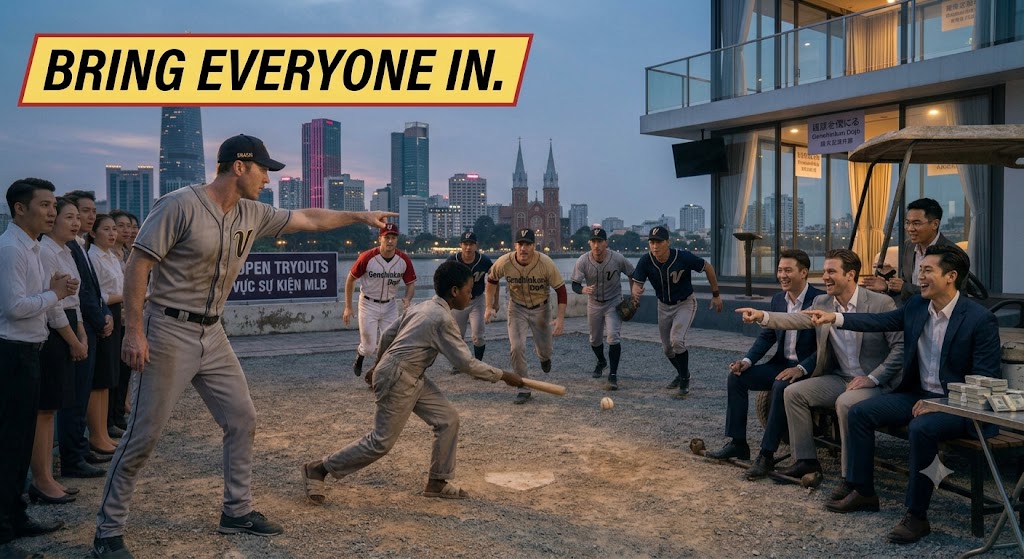
He had looked at a Black teenager carrying baseballs in old shoes and assumed the entire contest was safe because he had already decided what Cameron was capable of.
He did not like admitting that.
He did anyway.
A week after the charity event, he found Cameron near the equipment room.
“No cameras.”
Cameron looked around.
“Okay.”
Brent leaned against the wall.
“I owe you an apology.”
“For the money?”
“No.”
“For what I said.”
Cameron waited.
Brent continued.
“I saw the staff shirt.”
“The bat.”
“The shoes.”
“You.”
He stopped.
Then:
“And I made you into a joke before I knew anything about you.”
Cameron said:
“Yeah.”
Brent laughed quietly.
“Could’ve made that easier.”
“You want me to tell you it was fine?”
“No.”
“Then why apologize?”
Brent thought about that.
“Because I should.”
Cameron nodded.
“Okay.”
Brent looked almost disappointed.
“That’s it?”
“What else?”
“I don’t know.”
“Apologies don’t buy automatic forgiveness.”
Brent stared at him.
Then smiled.
“You really are annoying.”
Cameron smiled back.
“So I’ve heard.”
Owen Garrett became much more interested in Cameron than Brent expected.
Not because he thought Cameron was secretly ready for professional baseball.
He was fourteen.
That would have been ridiculous.
Owen wanted to understand the skill.
He arranged for Cameron to attend a supervised youth-development session.
The first exercise destroyed Cameron’s confidence.
Professional coaches moved the defense after every pitch.
Bunts were called randomly.
Pitch types changed.
Cameron failed repeatedly.
Out.
Foul.
Pop-up.
Out.
Out.
He became frustrated.
Owen stopped the drill.
“What’s wrong?”
“They’re too good.”
“Yes.”
“That’s the exercise.”
Cameron frowned.
Owen said:
“You thought beating Brent once meant you solved baseball?”
“No.”
“You look like you did.”
Cameron stared at the grass.
Then Owen explained.
“Your gift isn’t that every bunt works.”
“Your gift is that you understand why one might.”
“That distinction matters.”
Cameron looked at him.
Owen pointed toward third.
“Tell me why you were out last time.”
“Third baseman didn’t cross his feet.”
“Good.”
“Why foul?”
“Pitch was farther outside than I expected and I changed barrel angle late.”
“Good.”
“Why popup?”
Cameron sighed.
“Hands too stiff.”
“Exactly.”
Owen smiled.
“You’re learning more from the outs than the safe calls.”
Cameron hated that.
Which meant Owen was probably right.
Reggie Neal came to several sessions too.
He and Owen argued constantly.
Owen cared about measurable timing.
Reggie cared about decisions.
Cameron learned from both.
They measured his home-to-first times.
First ten feet.
Bunt exit angles.
Ball speeds.
Defender response.
Cameron discovered that some of the things he believed were wrong.
He thought bunting softer was always better when the third baseman charged aggressively.
Not always.
Sometimes a slightly harder ball forced a difficult barehand pickup farther from the line.
He thought fastest pitchers were hardest to bunt against.
Not necessarily.
Velocity could help deaden a ball if he received it correctly, though it reduced reaction time.
He thought left-handed hitting always gave him an advantage to first.
It gave distance advantage.
But certain defensive alignments removed it.
He wrote everything down.
That impressed Owen most.
Cameron loved being right.
Like everybody.
But he was willing to write WRONG beside his own theory.
That was uncommon.
Then came the question Cameron had avoided.
Did he want to play baseball seriously?
Not work around it.
Not analyze it.
Play.
Owen asked him directly.
Cameron said:
“Yes.”
“Then why aren’t you?”
“Work.”
“That’s not the whole answer.”
Cameron looked away.
Travel costs were part of it.
Transportation too.
But another piece was fear.
Cameron had been away from competitive baseball enough that going back scared him.
Working as a ball boy was safe.
Nobody judged his batting average.
Nobody cut him.
Nobody told him his arm was too weak.
He could study professional players without being measured against them.
Owen understood.
“You know what bunting does?”
“What?”
“It forces movement.”
Cameron smiled.
“That sounds like Coach Neal.”
“He stole half my ideas.”
Reggie, standing twenty feet away, shouted:
“You stole mine!”
Owen ignored him.
Then he said:
“You can’t spend your whole life reading everybody else’s first step.”
“At some point, take yours.”
Cameron tried out for a regional youth team that summer.
He was not the best player.
That mattered.
He made mistakes.
His throwing needed work.
His swing against high fastballs was late.
He occasionally relied too much on bunting.
One coach told him:
“If everybody knows your trick, it stops being a trick.”
Cameron answered:
“Then I need more than one.”
Good answer.
He made the team.
Not because Brent demanded it.
Brent stayed out of the selection.
Owen did too.
Cameron earned the roster spot.
He batted ninth during the first month.
He loved it.
Because ninth still meant playing.
Midseason, his team reached a tournament held at a complex twenty minutes from Kingsport Stadium.
Brent attended one game.
No announcement.
Baseball cap.
Sunglasses.
He watched from the back row.
Cameron did not know until the fifth inning.
The score was tied.
Runner on second.
One out.
Third baseman playing in.
The opposing coach clearly knew Cameron’s reputation.
The first baseman crept forward too.
Cameron stepped in.
His own coach gave the bunt sign.
Everyone saw it.
Cameron looked at the defense.
No empty space.
Then he smiled.
Movement space.
Pitch came.
He pushed the bunt hard toward first.
The first baseman charged.
Second baseman broke for the bag.
The ball passed the first baseman’s glove by inches.
Cameron reached safely.
Runner scored.
His team eventually won by one.
Afterward, Brent met him near the parking lot.
“You did it again.”
Cameron shrugged.
“Different.”
“How?”
“First baseman opened his glove too early.”
Brent stared.
“That is an insane thing to notice.”
Cameron smiled.
“You notice where pitchers miss by two inches.”
“Fair.”
Then Brent said:
“You know the funny part?”
“What?”
“I came here expecting to watch you bunt.”
“You did.”
“No.”