“Did you know your dad lowered other players’ speeds?” Isaiah asked.
“No.”
“Did you know he raised yours?”
“I knew my numbers were wrong.”
“Why didn’t you say anything?”
Mason looked toward his father.
“Because everyone liked me better at ninety-five.”
That answer was more honest than an excuse.
Isaiah nodded.
It was not forgiveness.
But it was the beginning of truth.
By midafternoon, the showcase had been canceled.
Families received instructions to preserve contracts, certificates, payment receipts, and player reports.
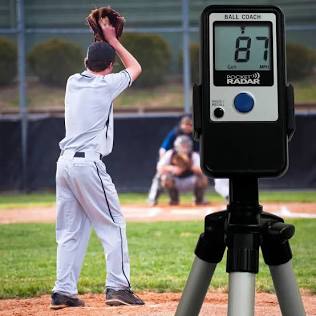
The regional council took custody of the radar gun and tablet.
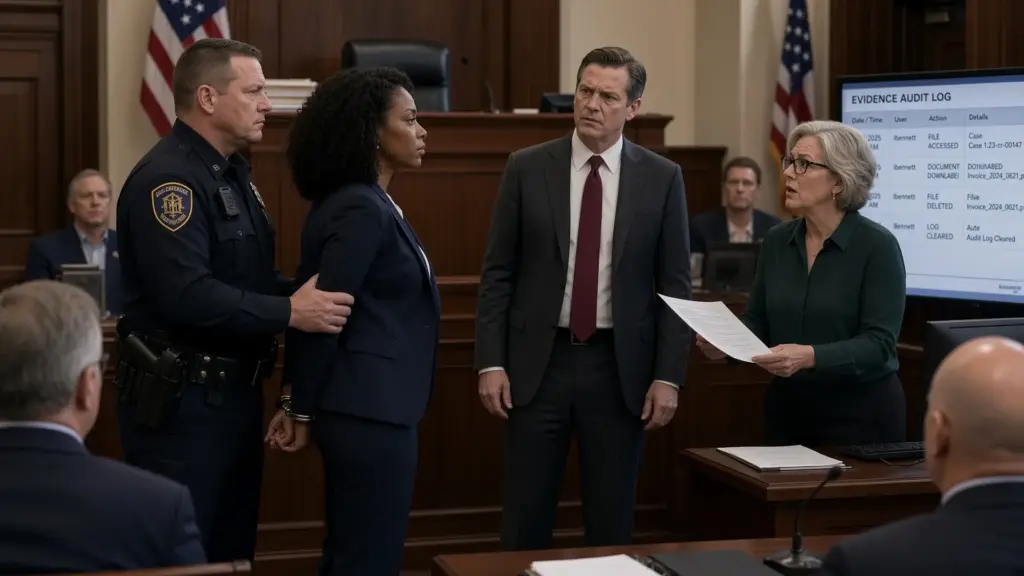
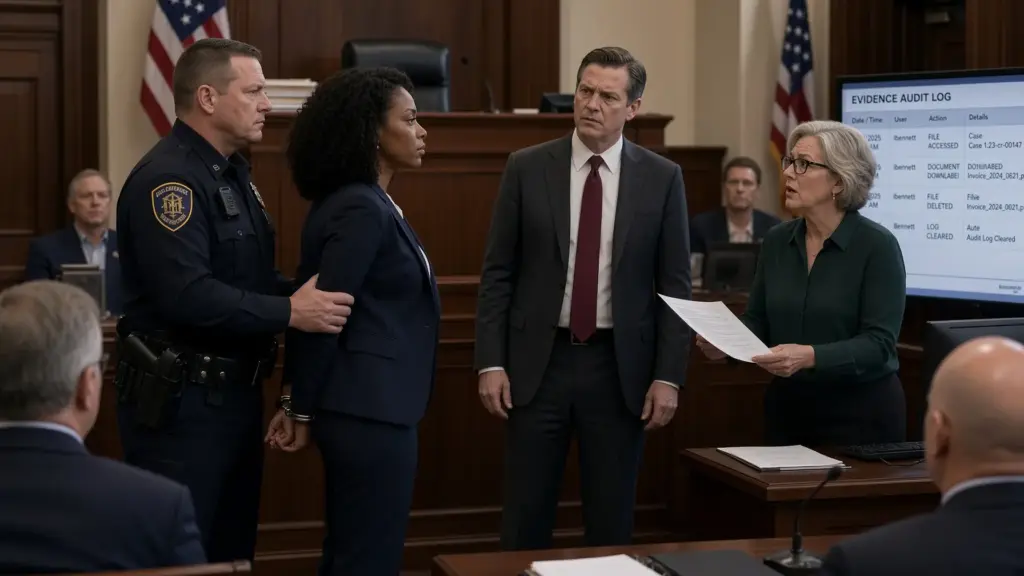
A technology specialist downloaded the device’s full history.
Brent had attempted to delete thirty-seven sessions.
The machine retained raw data in protected memory.
Those deleted sessions contained the clearest evidence.
Players appeared under false labels.
Speeds were adjusted.
Dates were changed.
Some throws belonged to athletes who had never attended the listed session.
Isaiah’s readings appeared eleven times in Mason’s profile.
Not once.
Eleven.
Brent had watched Isaiah practice through the field’s automated camera system.
Whenever Isaiah exceeded ninety-two, Brent saved the reading.
He later exported the strongest pitches under Mason’s name.
The reason extended beyond a father exaggerating for his son.
Harlan Elite Baseball Academy was negotiating a sponsorship deal with Titan Athletic Development.
The contract promised Brent four hundred thousand dollars if his academy produced three nationally ranked prospects within two years.
Mason was supposed to be the centerpiece.
His verified velocity reports helped push him into regional rankings.
Two other academy players received inflated numbers for the same reason.
Brent lowered the readings of competing pitchers so they would not threaten those rankings.
He also used bad numbers to pressure families.
A pitcher would register at eighty-eight.
After refusing Brent’s private package, the next official session showed eighty-three.
Brent would call the parents.
“He’s regressing,” he would say. “Without specialized training, scouts will move on.”
The training package cost four thousand dollars.
If the family paid, the next radar session showed improvement.
Sometimes overnight.
The player had not changed.
The calibration had.
Carlos Mendez’s father, Rafael, had spent money intended for a work truck after Brent claimed Carlos had lost seven miles per hour.
DeShawn Price’s mother borrowed from her retirement account.
Ty Nguyen nearly quit baseball after believing his arm had weakened.
Luke Garner received recruiting interest based on an inflated report and then faced humiliation when independent scouts measured him six miles slower.
The fraud harmed both groups.
Those lowered were denied opportunities.
Those raised were placed under expectations they could not meet.
The machine did not merely lie about speed.
It changed how children understood themselves.
County investigators found additional evidence inside Brent’s academy office.
There were two sets of player evaluations.
The official files contained altered numbers.
The private files listed raw measurements, family income estimates, payment history, and what Brent called leverage points.
FINANCIAL AID — MOTHER FEARS LOST OPPORTUNITY.
FATHER OWNS BUSINESS — PREMIUM PACKAGE.
COMPETING COACH — LOWER VISIBILITY.
MASON THREAT — SUPPRESS RANKING.
Isaiah’s file carried no registration number.
Only his name.
BALL BOY. EXTREME RAW ARM. NO FUNDS. CONTROL ACCESS.
Beneath that was a final note:
DO NOT LET SCOUTS SEE HIM THROW.
Isaiah read the page three weeks later inside Alicia Warren’s office.
His mother sat beside him.
Earl stood near the window.
Daniel Mercer placed the copy face down when Isaiah finished.
“How does that make you feel?” Mercer asked.
Isaiah looked at the empty desk.
“Like he knew.”
“He did.”
“He watched me work every weekend. He knew I could throw.”
“Yes.”
“And he still treated me like that.”
“Yes.”
“Why?”
Mercer did not give him a simple answer.
“Because your talent threatened something he had built.”
“His son?”
“His business. His reputation. His story about who deserved to be seen.”
Isaiah looked toward his mother.
“If I hadn’t asked for one pitch, would anybody know?”
Earl answered.
“I would.”
“That isn’t what I mean.”
“I know.”
Rochelle took Isaiah’s hand.
“You asked.”
“What if he had fired me?”
“We would have managed.”
“You need the money.”
“I need my son more.”
Isaiah looked down.
Rochelle continued.
“You have been protecting me from bills I am old enough to understand.”
“I was helping.”
“You were.”
She squeezed his hand.
“But helping does not mean making yourself small so other people stay comfortable.”
The regional council offered Isaiah a full scholarship to a development program.
Three travel organizations offered roster positions.
A private academy in Dallas promised housing, equipment, and national exposure.
A sporting-goods company offered free gloves.
A local car dealer offered to “support the Reed family” if Isaiah appeared in advertisements.
Mercer rejected most offers before Isaiah saw them.
He explained each one to Rochelle.
Some were generous.
Some were investments disguised as gifts.
One contract gave a private academy control over Isaiah’s name and image for six years.
Another required repayment if he transferred programs.
A third offered free training but demanded twenty percent of future endorsement income.
Rochelle read every page.
“This is baseball?” she asked.
“This is money near baseball,” Mercer said.
They chose a nonprofit regional program overseen by multiple coaches.
Isaiah would remain at his public school.
He would receive medical evaluations, transportation, equipment, academic tutoring, and limited pitching instruction.
No one would own his future.
The first medical assessment found that Isaiah had unusually fast arm speed but weak stability muscles around his shoulder.
Without careful training, the same talent that attracted scouts could lead to injury.
The program limited his throwing.
At first, Isaiah hated it.
He had finally been discovered, and everyone told him to rest.
Earl approved.
“An engine that runs hot still needs oil.”
“That doesn’t sound scientific.”
“It kept tractors alive before you were born.”
Isaiah received a new glove.
He kept the old one.
The red string had been tied by his father, Malcolm Reed, before Malcolm died in a construction accident when Isaiah was nine.
Malcolm had never played professional baseball.